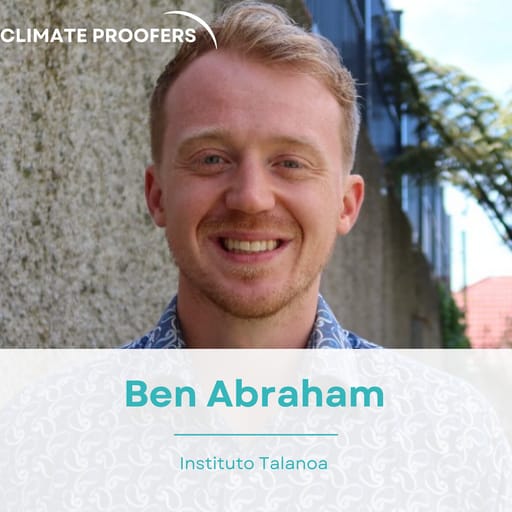
Transcript 0:00 [upbeat music] Hi, everyone, and welcome to Climate Proofers, the show all about those on the front lines of climate adaptation finance, tech, and policy. 0:13 I'm Louis Woodall, editor of Climate Proof, the adaptation publication, which you can read at www.climateproof.news. 0:21 It's almost here, folks, the Super Bowl of climate politics, the World Series of environmental diplomacy. 0:26 I am, of course, talking about COP30, the UN Climate Change Conference, which this year is taking place in Belém, Brazil. 0:34 The summit sorta kinda kicks off on Thursday this week with a gathering of world leaders and ministers, but the big negotiations between all countries kick off on November the 10th and run through to the 21st. 0:45 Brazil is leading this year's summit, and they've laid out a packed, ambitious agenda, especially on climate adaptation. 0:51 Ana Toni, the conference's CEO, says she wants these talks to be a turning point for adaptation and resilience. 0:57 And she's aiming high, turning national adaptation plans into investment-ready strategies, weaving resilience into fiscal policy and corporate decision-making, and scaling up the tools and data that will help finance ministers and investors focus on what really matters. 1:11 Many developing countries also want the conference to agree a new dedicated adaptation finance target that sets out how much rich countries should deliver to poorer, more climate-vulnerable nations. 1:22 This is important because the previous adaptation finance target is expiring. 1:26 This was the so-called Glasgow Climate Pact goal, which committed parties to doubling 2019 adaptation finance flows to around forty billion dollars by 2025. 1:36 Without a new goal, some believe there's a danger that adaptation finance flows could sputter out, a belief backed up by the findings of the UN's recent Adaptation Gap report, which I'll talk about in our news roundup. 1:46 Any negotiations over a new finance target, though, are likely to be fraught given the shift in geopolitics and the global economy since the reelection of President Trump, who has taken a hammer to both US climate policy and multilateralism writ large. 1:59 Then there are the awkward questions over what form adaptation finance should take and what objectives it should be tied to. It's a big topic, so we need an expert on the ground to walk us through it. 2:09 Luckily, we've got one in today's interviewee, Ben Abraham, a senior consultant at the Talanoa Institute. 2:14 That's a Brazilian climate policy think tank that's been working all year on ways to realize the COP30 adaptation agenda. 2:21 Ben joins the pod to break down the different groups pushing for, and in some cases pushing back on, a new global adaptation finance target. 2:28 We also talk about the role private and blended finance can play in getting adaptation projects off the ground, and why setting national level finance goals is critical for hitting the bigger international targets. 2:38 For all you COP30 watchers out there, this is an episode you won't want to miss. 2:43 Before we get started, a reminder that if you enjoy and value this podcast, please consider dropping us a rating on Spotify or Apple, and maybe even writing us a review if you're feeling generous. Every little helps. 2:54 Also, if you want to go the extra mile and support us with your wallet, head over to www.climateproof.news/upgrade to become a paying member. 3:03 Right, in a moment, my conversation with Ben, but first, a roundup of last week's top adaptation and resilience stories. 3:09 [whooshing sound] In finance, global efforts to pay for adaptation are moving in the wrong direction, according to the latest UN Adaptation Gap report. 3:17 International public finance flows declined from twenty-eight billion dollars in 2022 to twenty-six billion dollars in 2023, and the adaptation finance gap, which is the difference between the supply of financing and the needs of the developing countries, is now estimated to be around three hundred and ten to three hundred and sixty-five billion dollars. 3:35 The report adds that based on current trends, rich nations are likely to miss the Glasgow Climate Pact goal of delivering forty billion dollars in adaptation finance annually by the end of this year. 3:44 [whooshing sound] In policy, the latest Lancet Countdown report says climate-related health threats reached unprecedented levels in 2024, underscoring the urgent need for adaptation policies in the healthcare sector. 3:55 The yearly analysis finds that twelve out of twenty indicators monitoring climate change-related health risks have soared to new heights. 4:02 Heat-related deaths have increased sixty-three percent since the 1990s, while in 2024 alone, wildfire smoke-related fatalities hit a hundred and fifty-four thousand globally. 4:12 Governments and civil society are failing to respond to escalating climate-related threats with the requisite urgency, the report adds. 4:18 It notes that mentions of health and climate change by governments in their annual UN general debate statements plunged from sixty-two percent in 2021 to thirty percent in 2024. 4:27 It also highlights signs of backsliding on climate health engagement by the media and corporations. 4:33 Finance for climate adaptive healthcare systems is running low too, limiting their capacity to make protective interventions. 4:38 [whooshing sound] And in tech, the Wyoming-based startup Frontline Wildfire Defense has raised forty-eight million dollars in Series A funding to build out its advanced water and foam protection system for residential properties. 4:50 Founded in 2017, Frontline designs customized systems to protect buildings from ember ignition, which is the leading cause of home loss during wildfires. 4:58 These systems can be installed in both new and existing homes and are designed to function independently of municipal infrastructure, which can be knocked offline during wildfire events. 5:07 During the devastating Los Angeles wildfires this January, the company activated systems on sixty-one homes in high-risk areas, ninety-six percent of which survived. 5:16 The funding round was led by Norwest, a venture and growth equity investor focused on scaling early-stage companies. [whooshing sound] Okay, that's it for this week's roundup. Now onto my conversation with Ben. 5:27 [upbeat music] Hi, Ben. Where are you calling from today, and what do you do? Hi, Louis. 5:32 I'm calling in from Salvador, Bahia in Brazil, and I am a s-senior consultant for Instituto Talanoa or Talanoa Institute, a think tank here in Brazil. Thank you. 5:42 My first question is on what the Talanoa Institute is all about, what you do for them, and what the organization is working towards in the run-up to COP30. Yeah, thanks. 5:52 So Talanoa Institute is a climate policy think tank in Brazil, and it works across both domestic policy here in Brazil as well as, uh, global climate policy. 6:02 And understandably, with this year, COP30 being in-The LEM and the Amazon. There's just so much going on this year, but Brazilian and global context. 6:10 I, I joined the team in, in May, and before this, uh, I'm from New Zealand, and before this, for the last many years, I was working in the New Zealand government across, uh, domestic and international climate policy. 6:21 I was at the prime ministry as a climate finance advisor leading our climate finance negotiations and advising on our portfolio of climate finance projects. 6:30 And, uh, in May this year, I decided to take a bit of a break from government and come over to Brazil for a bit, and, uh, lending my experience and expertise across government and, uh, global climate negotiations, um, with Telenor. 6:42 So I'm here as a senior consultant and just doing what I can to support the team in the run-up to COP thirty across adaptation and finance issues. Okay. 6:50 Now let's get into the nitty-gritty of the COP thirty negotiations, and particularly those around climate adaptation finance. 6:58 So my understanding is that there are a number of developing countries that are pushing for this summit to produce a clear binding adaptation finance target within the context of the broader climate finance goal. 7:08 And this is needed by those countries because the last adaptation finance target of forty billion dollars a year by twenty twenty-five, that was agreed in Glasgow at COP twenty-six, that has expired now. 7:19 So there have been talks about doubling or even tripling the amount of ad- adaptation finance that is going to be pledged. That's my understanding of the situation. 7:27 Can you give us the lay of the land over there in Brazil? What countries and country groups are pushing hardest on an adaptation finance target? Yeah, thanks. 7:35 Uh, I, I think the best way to tackle that is just to unpack a little bit more of the, the context. 7:40 You, you mentioned there's this existing, uh, target which was to sort of double adaptation finance from twenty nineteen levels by twenty twenty-five to reach around forty, forty billion. 7:51 Um, but, you know, that sits in the context of kind of how does this international climate finance work. 7:56 It normally works through a combination of kind of longer term sort of collective targets, such as this forty billion by twenty twenty-five, or previously we had this sort of hundred billion dollar goal for mitigation and adaptation finance, and now we have this new twenty thirty-five NCQG global finance goal as well. 8:15 So you have these collective targets, but then that's always complemented as well by, uh, kind of the major donor countries will make their own sort of nationally determined climate finance commitments, say, for the next three or four years to represent how much they're gonna, you know, fork out as a contribution toward those collective goals. 8:34 And you sort of need both of these to provide the sort of the long-term vision and ambition, but also that near-term predictability. And the situation we face now is actually that both of those pillars are running out. 8:47 So there's this collective adaptation finance target, and that was for twenty twenty-five, that's expiring. The hundred billion dollar goal also expires in twenty twenty-five. 8:56 But also, almost all of the major donor countries had these multi-year commitments that are also expiring in twenty twenty-five. 9:04 So now all we have is this twenty thirty-five long-term NCQG ambition, which doesn't have sort of a particular sub-target or anything for adaptation. And we know adaptation has been historically underfunded. 9:16 So we're looking at a situation where in the near term, there's no predictability at all for future adaptation plans. It's kind of falling off a cliff. 9:24 So in that context, it's not surprising that, as you mentioned, there is this, this push for landing or trying to get some kind of, uh, adaptation finance commitment or target. 9:34 Um, and really the, the major push is coming from the, the least developed countries group, the LDCs, as we call them, uh, association, and that's a group of, uh, counting about over thirty countries, um, mostly in sub-Saharan Africa, but also some in Asia, Pacific, and other parts of the world as well. 9:52 And they've come up with this call saying, you know, we need to, um, set a new target and we need to scale up. 9:59 And so they've been calling so for a tripling, or a tripling of the doubling, which really means let's go for, you know, take the forty billion kind of target for twenty twenty-five and let's triple that and aim for a hundred and twenty billion US dollars for adaptation finance, uh, by twenty thirty. 10:17 So that's the, the main concrete proposal on the table, and LDCs have been the main voice behind that. 10:23 Um, we have seen a few other developing country groups also making the voice that, "Hey, we really need something on adaptation finance." 10:30 Um, the African Group of negotiators, uh, they've been really calling attention to, you know, the need to have, you know, finance targets based on, on needs or, you know, taking into account the actual science and needs. 10:42 'Cause if you look at actually the costs of adaptation in the, the years ahead for developing countries, it's much higher than even a hundred and twenty billion. 10:50 Um, but they haven't put sort of a concrete proposal on the table. 10:53 But there's lots of voice from these developing country groups, uh, but the main sort of specific proposal on the table is this one from the LDCs for, uh, a tripling towards a hundred and twenty billion. 11:05 And what headwinds is that campaign facing then? I mean, we always know that developed countries want to kind of push back against very large numbers of climate finance, right, for mitigation or adaptation. 11:19 There's also a lot of concern amongst developed countries about the split between public and private finance or facilitated finance, right? 11:25 Because public finance means coming from the government's own tax base, whereas private finance is that, "Oh, we're a developed country. 11:31 We can encourage our private institutions to do more in adaptation, and that's our commitment," right? So what's the opposition at the moment look like to expansion of the adaptation finance target? Yeah. 11:41 The headwinds are pretty strong. The headwinds are pretty strong, um, for the reasons that you've said. A- and you know, it's one of those things where you also need to take into account, like, what is gonna be 11:51 w- a good target, right? An effective target is one that has the ambition that stretches you and drives action. That's the whole point of a target, right? 11:59 Creates some accountability and leads to change in the real world. So you need it to be ambitious. 12:05 Uh, but also if a target is so ambitious that it sort of-Feels like it defies reason for those trying to, to meet it and might lead to kind of a, an absolute under incredible shortfall, then that creates a lot of risks and can create trust in the process as well. 12:21 So it's a very difficult political process to, to land any kind of target. 12:26 And that's actually what we've just been through over the last three years negotiating the, uh, new collective quantified goal climate finance that was agreed last year. 12:35 And when you sort of see the opposition and the, the arguments against it from, you know, these debates, you know, um, there's kind of a few different ones. 12:43 And one is this kind of almost in principle position that we just spent three years that was very grueling and difficult, the negotiations to agree a new global climate finance target and everything under the sun was discussed and considered as part of that, including how to talk about adaptation, how to talk about loss and damage, sub goals, types of finance. 13:04 And all of that was finally agreed with a bit of acrimony and a very fine balance that was agreed. 13:11 Uh, and the idea of kind of now coming back the next year and sort of agreeing another target for something that wasn't included in that one, uh, can feel like it's sort of reopening those very fine balance negotiations and, um, some of those countries might think, "Oh, well, what about the things that we didn't get, that we want, uh, as well?" 13:29 And so there's this sort of in principle thing of, you know, let's not reopen those, um, negotiations, which I think is sort of the starting point of the, the headwinds. 13:38 Um, the second one is really about feasibility, as you said. You know, the, the multilateral development banks, they, they provide actually most of the, the adaptation finance, about two-thirds of it. 13:50 And, and we see that they have a commitment to reach around forty or fifty billion of adaptation finance in twenty thirty, which leaves seventy billion, you know, perhaps, um, for the kind of bilateral providers to make up. 14:02 And those bilateral providers provided about eleven billion in twenty twenty-two. So you're talking maybe a seven x increase in the next, you know, five years or so. 14:15 Um, obviously it would depend on exactly where things have reached in twenty twenty-five when the data comes a bit late. 14:20 But that's, that seems a pretty big, big ask for them that I think they're, they're, they are doubtful that they could reach something of that level of ambition. 14:27 Um, and you mentioned the kind of the loans and the grants part, like a greater focus on adaptation really brings that into the spotlight, right? Because adaptation tends to ne- require more grant-based funding. 14:39 You can do some loans and private finance, but you just... There's more of it that has to happen with public finance and grant finance. 14:45 So if you kind of tip the scales more firmly towards this greater amount of adaptation, in practice that probably will lead to a greater, um, ask on the public purse in terms of total fiscal outlays to meet whatever that target is. 14:59 So there's a sense that, you know, making a higher and ambitious adaptation, that will make it more challenging to, to achieve overall for, for those countries that are providing it. 15:10 Um, so for them, it's a pretty challenging ask because there's a lot of head- uh, headwinds, and we're gonna have to see how this all kind of comes together with some pretty strongly opposing positions. Yes. 15:21 My thinking, and correct me if I'm wrong, is that there is a fine balance to be struck between a target, a high target numerically, and then a target that actually can be achieved through the financial instruments that are most important to climate vulnerable countries, right? 15:35 So my, my fear is that when you have countries committing to a very large target, like we saw last year for climate finance overall, there was this, what, one point three trillion dollar a year kind of aspiration that got a lot of headlines, but actually if you dig in, it was three hundred billion was actually the public finance commitment, right? 15:52 And that is the commitment that I personally feel, and I know other experts feel, is the one that's actually more binding because that is coming from government's coffers, so to say. 16:01 And my concern is that, okay, if you have a tripling adaptation finance target, maybe that's agreed to, but maybe that allows developed countries to go back home, develop programs and frameworks where they can say they've met their target, but they're doing so not really with public grant money, but with complicated financial instruments that actually end up extracting more money from the developing world in the form of loan repayments, et cetera. 16:25 So what do you think about that? 16:26 The, the, the challenge between having a high target which is needed, but making sure that the actual money is, is real grant money that doesn't have to be paid back, that is actually implementable in the countries that need it. 16:37 Yeah. No, it's a really, it's a really good question on sort of, yeah, dives into the, you know, details of how you formulate these targets, right? 16:43 And you're right that in the NCQG, the three hundred billion target is... It, it's also reflected in the legal language of these decisions. 16:51 You know, the three hundred billion target is, you know, the parties decide to set a goal of this. 16:56 Whereas the one point three trillion is sort of a, a call to action for all countries and parties and stakeholders to scale up finance towards it. 17:04 And, and that's also part of the strategy, because even this, uh, doubling of adaptation finance target for twenty twenty-five that expired this year, all of the developments will race to tell you, it's not actually a target. 17:16 It was just a decision that urged them to do something. But of course, the politics of this, people take the narrative, shape it, and kind of in practice it's become a target, uh, at a, at a stronger sense. 17:27 And so this factors into negotiations in terms of creating the space where people can agree to something, but then how it's interpreted afterwards, uh, makes a big difference. 17:38 This point that you mentioned at the start there about the instruments and the quality, it's a really great point, and I think if anything, we've heard that the most coming from the AOSIS group, the Alliance of Small Island States. 17:49 Yeah. Kind of in response to some of these ideas around of a new target. They've really been stressing like, "Yes, okay, we can be open to a new, um, new target. That would be good. 17:59 We need to scale up, but we're really concerned about these quality dimensions and what, what's the nature of this finance? Is it gonna be grants? How's it gonna be counted?" 18:07 Because that all those-Qualitative details are really left very open, uh, not defined at all when we d- uh, when this doubling was agreed. 18:16 And, and they're thinking, "Hey, if we're gonna do another one, we need to improve those elements because, uh, those matter just as much, uh, as the total quantum." Excellent. 18:26 Now, actually focusing on the previous target then, the forty billion, what's your understanding of the extent to which that was met, right? 18:33 And this comes back to the point you made earlier about national level adaptation climate finance targets, and actually how they are formulated in different countries. 18:42 Again, some are hard targets, I would say, like, you know, commitments from the government coffers. 18:46 Some are more like, "Okay, yeah, through our policies and through our engagements with private sector and MDBs, we have helped to create X amount of climate finance adaptation." 18:56 So can you talk about that forty billion target and when will we actually know the real progress that has been made over the last six years? Yeah. 19:02 The lag is, is real, and it almost feels crazy because, you know, we're in the end of twenty twenty-five now. You know, Trump got elected this year. 19:11 There's been like all these countries that have announced cuts to their official development systems, and it just feels like we're in this... 19:18 Well, we are in this environment where there's such a pressure on multilateralism and public coffers for climate stuff, especially international support. 19:27 But actually, the official data that we have and the process is for, is still only for twenty twenty-two is the most up-to-date one, which is actually a time when the international climate finance was increasing a whole lot because countries had just made big new pledges in twenty twenty-one, and we're in the process of scaling them up. 19:43 So the... We have this kind of two-year reporting delay, um, where, where things take a long while to, to come out. 19:52 So at the end of next year, we will get, uh, official data through the UNFCCC reporting for the finance provided and received in '23 and twenty twenty-four. 20:04 And then the next two-year cycle, which will be in the end of twenty twenty-eight, we'll get the data for twenty twenty-five and twenty twenty-six. 20:11 So the status quo is, without anything changing, we're only gonna get this twenty twenty-five data officially in twenty twenty-eight, which is still a long time away. 20:20 Um, so there's things that could be done to try and bring forward the reporting to maybe get a special report in twenty twenty-seven or something to, to get that twenty twenty-five data. 20:31 But, you know, we operate in this world of delays, and then afterwards we have some projections and indicative numbers and things that have come out. 20:38 A few reports recently have been trying to report on twenty twenty-three data, and they've been using some OECD data that's made available for official development assistance, and those should be treated as indicative because they use slightly different methodologies and data sets than how the climate finance is kind of officially reported in the UNFCCC. 20:59 Um, but with that context, kind of what we know is that kind of more officially the twenty twenty-two numbers is that there was about thirty-two point four billion of that adaptation finance provided and, um, twenty-eight point of that was kind of public, 21:14 um, outflows, either bilaterally or through multinational institutions, and the, that remainder was kind of the additional private finance by those public, uh, interventions. 21:24 Um, and it's a mix, probably about forty percent of it was grants and sixty percent of it was, was loans. Um, but it varies a lot between like what type of recipient country you're talking about. 21:34 You know, the, the very lowest income countries mostly get all grant... mostly get grants, whereas the, the more wealthy countries have a higher percentage, uh, of loans, uh, in there as well. 21:46 And of course, that leads to, uh, lots of discussions around sort of quality of finance, debt and loans, all of this as well. 21:54 Yes, and it is interesting at this time of year when you have all the reports coming out from different think tanks, different authorities- Yeah... trying to calculate and track adaptation finance. 22:03 The Climate Policy Initiative does some work here. The OECD, of course, as well, and sometimes they agree and sometimes they don't. What I think you're showing there is that there... 22:10 The, the direction of travel is in the kind of progress direction, right? There is progress being made- Yeah... and there is more adaptation finance going towards LDCs and other vulnerable countries. 22:20 But there, there's still a question about the precise makeup of that finance. And also I'm interested, from your perspective, where the money's going. Is the money tilted towards certain adaptation goals over others? 22:33 We hear a lot about adaptation money going towards Africa for agriculture reasons and water and sanitation reasons, and in Asia for like coastal risks, et cetera. 22:43 But is there a tilt towards some adaptation goals rather than others? 22:49 And how do you think actually the development of the adaptation indicator process under the global goal adaptation could help even out adaptation finance across different adaptation objectives? Yeah. 23:00 It's, it's a really, it's a really good, good question. I think, yeah, some of the sectors like, uh, agriculture obviously can, uh, it's a really big one and receives a lot. 23:11 You see others kind of, you know, you mentioned, uh, water systems and, uh, sort of coastal protection is another that particularly requires a lot of, um, public adaptation things to go to. 23:22 And it's always a, a question of, you know, how does this get allocated? 23:26 And you see it, um, varies a lot in practice between some finance providers come with quite strong already preferences for what they would like to fund. 23:38 Other finance providers are very open to saying, "What would you like to be funded?" Uh, and then countries can express their own needs and, uh, of course, even then within country vary, vary depending 23:52 who you're talking to in terms of how the priorities are, are expressed. 23:56 And I think this links back to this whole idea of the importance of having well-developed, uh, national adaptation plans, um, that can sort of clearly determine, you know, where those priorities are and hopefully develop that with sort of full buy-in across sort of government with, um, contributions and input from across the community and society that can-Make a sort of cohesive and consistent picture of where the priorities are and what needs to be, to be funded. 24:23 Um, that's still obviously a, a work in progress, but I think that's the, the logic, and I think it's, uh, the right one. 24:28 Um, and in the GGA indicators, uh, you're right, the global goal adaptation mean, are hopefully gonna agree at least 100 of these indicators across a whole range of areas. 24:38 And challenging because on one hand, uh, it's meant to give a sense for tracking progress towards adaptation at a global level. 24:46 On the other hand, it's not meant to be sort of a top-down exercise telling countries what to do, because every country's context is so different. 24:53 But I think the hope is that it provides some kind of starting point that can help those countries who are in the process of developing national adaptation strategies to take some inspiration, uh, be able to maybe identify some key areas of data points and then kind of fill the... 25:11 filter it into their, their national, um, plan. 25:14 But I think there's maybe also a risk that, you know, if people focus too much on these sort of top-down, globally defined indicators, that funders might sort of overly focus on those rather than listening to actually what the country might say that they, they, they want, which might be slightly different than, say, those global indicators look like. 25:32 So there's always a sort of tension between sort of top-down and bottom-up, um- Yeah, it's a very good point. I hadn't thought about that. 25:38 My perception has been that money goes towards those projects that have sort of multiple benefits, right, and, and multiplier impacts. 25:47 So projects that help adaptation and mitigation and job creation and biodiversity, you know. 25:52 That seems to be where a lot of money goes, but also towards projects where there is kind of preexisting sustainable development expertise, which is why kind of water and sanitation and agriculture I think gets a lot of focus. 26:03 That's my understanding. And yes, the indicators could either help correct for that or maybe reinforce certain trends. That's something to consider for sure. 26:10 Now, can I turn to, like, how the adaptation finance debate writ large has changed over the last year, right? Because, again, there's been an avalanche of papers about adaptation finance this year. 26:19 You've probably written a few of them yourself. 26:21 [chuckles] Uh, but there seems to have been somewhat of a sea change, in my view, in that there are more stakeholders, thought leaders saying, "Look, the truth is, private finance is not going to help close this adaptation finance gap," right? 26:34 There's a sense that there's only a limited s- you know, silo activity which private finance is gonna get meaningfully involved. 26:42 And then there's also been an interesting discussion taking place over the role of blended finance, right? 26:47 Blended finance, I remember a year and a half ago, was touted as the great hope of adaptation finance, and you do have excellent organizations that are working to put together blended finance structures. 26:56 And we've just seen some recent ones launch, right? The Insurance Development Forum put together this infrastructure fund for, uh, uh, emerging markets focused on climate resilience. 27:05 You had climate fund managers come out with their newest fund as well, which is a blended finance structure, which is great. 27:10 But then some analyses of these blended finance structures suggest they're not as effective at mobilizing private capital as they kind of purport to be. 27:17 So there seems to be some sort of pushback against blended finance and a greater push towards, okay, look, adaptation finance has to be public finance first and foremost. 27:24 It should be provided by those entities that are able to support it, mainly MDBs, multilateral development banks, and private finance and blended finance should be focused on much narrower niches of the adaptation landscape. 27:35 So does that summary, does that resonate with you? What have I missed there, and, and what do you think about the private debate and the pr- blended finance debate? Yeah. It's a good observation. 27:45 I think I, I definitely see the, the lines of argument there that you've done a good job of summarizing. 27:51 And I think it all has to be kind of seen, you know, seen in context where, you know, a few years back there was a bit of a rising tide and enthusiasm around, uh, blended finance, getting more private finance often to adaptation, which, which is great. 28:07 And then of course we had the, this NCQG new finance goal agreed, which has this kind of 28:13 very aspirational $1.3 trillion target, which I think a lot of people would see that a lot of that might be made up from private sector investment. 28:22 And now you've just had this kind of post NCQG sea change in politics where you've had public budgets being, being cut for development assistance sort of thing. 28:31 So, you know, I think there's a sense from a lot of people that while the really public budget side has been really 28:37 under attack and under threat, and there's a need to, to reinforce the importance of it, to say, actually, you know, it's, it's really bad news if we've got international public climate finance, uh, being cut or going down and we can't let it sort of be forgotten in this kind of, you know, push towards, um, unlocking more private finance. 28:57 And so it's all, I think, a kind of sort of balancing game of, like, where the narrative is. And I... 29:02 Although I do think a lot of the reports, if you get into some of the detail, you sort of see that actually the, the nuances that, like, there's a role for both and a kind of some things are gonna need more public finance. 29:14 We've got some, you know, basic coastal defenses and other areas like agriculture or water. 29:19 There is more ability to, to mobilize private finance and at the same time highlighting that, hey, it hasn't been as effective as we would like, but it, it is happening. 29:29 You see it as, you know, maybe there's this report recently saying that each $1 in mobilizing maybe 51 cents of private adaptation. 29:37 And if anything, to me, that's not a reason to, to say, "Oh, it clearly doesn't work, let's give up." It's like, well, we need to improve it. We need to do more. 29:45 It's still relatively new to this compared to, uh, some other sectors where some of the business models are, are much more developed. And, you know, you've mentioned some of the good examples as well. 29:55 I was thinking of ideas about Climate Investor Two as well, from climate fund managers. 30:00 There's things out there trying to sort of incentivize the development of new technologies that are more suited to low income contexts, whether it's cooling technology, air conditioning, things that can be made fit for purpose in a very low income context. 30:13 There are things that are out there that are, that are happening and... But at the same time, we need to know that both things are true. 30:18 That actually there is gonna be a massive-Uh, amount of public finance that's required, uh, to deliver across the full scale of adaptation needs. 30:27 And, you know, some people will try and get into debates around, oh, exact- and specifying sort of top down, like how much needs to be private, how much needs to be public? 30:35 And almost as though we're trying to sort of divide up now for twenty thirty-five exactly how much finance needs to go where. 30:43 And I don't necessarily think that that's the right debate to have, but more of like, really, how do we scale up finance from all sources now? Because that's what we need to do. 30:52 How do we get better blended finance where it can work? How do we rebuild the, the public support for more international public climate finance? We need to do all of those, all of those things. 31:03 But inevitably, you know, people who are working in this always feel pressured by the narratives to move it in different ways. Um, but I think we sort of take a step back. 31:12 You know, the, the question is around how do we, uh, sort of bring these narratives together and, and see how, you know, we, we need all of the above. 31:20 And we don't know exactly what the exact mix is gonna be come twenty thirty-five, but we need to be pulling all the levers today, both public and private. 31:28 Yes, there are those who take the sort of ideologically pure approach to adaptation finance, right? They say if a fund- Mm.... 31:35 if an instrument is only doing X percent towards a certain type of water treatment or a certain type of agriculture, regenerative agriculture practice, then it shouldn't really count as adaptation. 31:44 And the upswell of investment taxonomies and approaches to adaptation investment, which would be very helpful, but it creates the opportunity for people to quantify finance differently. 31:56 [chuckles] And that's why you have these conflicting numbers about how much money is actually going to adaptation finance. And I, I do swing back and forth on this, I, I'll admit. 32:02 But I do feel like if there's a large- Mm.... block of finance that's going towards adaptation, but adaptation is kind of defined fuzzily, that's still good, you know? 32:11 Um, if a fund, yes, if it could accord it directly to every single one of the hundred indicators that the Global Goal on Adaptation is creating, and yeah, perfectly aligned to each one, but it was a very small amount of money, the actual real world impact might be less than a larger fund that is a bit woolier in terms of their definitions, you know? 32:28 So I think, I think we're also concerned about resilience washing, right? Which is where money is said to be going towards adaptation resilience, but actually isn't. That's a legitimate concern. 32:36 But I also think we should be happy that there is money going towards things that are being described as adaptation resilience, because at least it creates that momentum, it creates that sort of 32:46 norm that other people can follow. Yeah, I think you're right, and I think that word momentum is, is key. 32:51 I think it's really important that the kind of nerdy adaptation finance and finance accounting community really wades into these discussions around how to account for this, what are the definitions, uh, at a project by project level, around how things are aggregated, uh, at a global level. 33:09 How do we think about projects that are sort of cross-cutting or mainstreaming adaptation finance, just waiting for adaptation elements, and this one has another focus. These are all super important debates to be had. 33:20 But I think the key is to make sure that we don't have them in a way that sort of undercuts momentum, whether it's momentum behind rebuilding the support for public finance or whether it's momentum behind those who are doing good work to improve and scale blended finance structures where they, where they do work. 33:35 So that momentum thing is, is key, particularly if you look just where we are in the state of the world right now. Okay. 33:42 Now I want to turn to public finance institutions, multilateral development banks, the international finance institutions like the World Bank and the IMF. 33:50 They've been pushing for adaptation finance and climate finance more broadly in this context of straightened public budgets and of course, US policy being very much opposed to multilateralism on climate, indeed on anything. 34:03 But we have seen some interesting innovations in that sphere. 34:06 We've seen the World Bank continue to work on like climate resilience ratings and is trying to embed an understanding of resilience and physical climate risk into how they kind of disperse loans. 34:18 You had the IADB, the Inter-American Development Bank, is really pushing for adaptation finance here. 34:23 And they came out during New York Climate Week with this ReInvest+ structure, which is an interesting way to try to kind of like tweak the blended finance approach, right? 34:32 Which is like the MDB, you know, grabs together a bunch of loans that have been issued to... issued by local banks, and they're doing well. They're, they're being repaid. Bundle them up, sells them to the bond market. 34:43 Bond market likes it because there's guarantees in there. These loans have been proven to be safe and secure. And that frees up capacity on these local banks to do more lo- lending, right? 34:52 So that's a really interesting pipeline, a really good finance innovation, I think. We'll see if it works in practice at scale. But it does seem that MDBs are really leading the innovation here. 35:00 Is that your understanding? And what else can MDBs do in the context of adaptation finance? Yeah, you're right. There is some really, um, good examples. 35:07 I think, I think the ReInvest+ one is really, uh, cool and, you know, in theory could bring a lot of, uh, scalable potential, but we'll have to see. 35:16 And I think have to see is kind of where we are, because it's great we've seen ReInvest+, we've seen a lot of move towards and a momentum behind integrating sort of climate disaster risk clauses into loans. 35:27 You can sort of pause repayments if there's climate disasters, sort of more mom- momentum behind debt swaps and figuring out how to, how to do those in a way that, um, is efficient and makes sense in transaction costs for, you know, adaptation and, and nature investments. 35:43 Um, a- I think it's too early to tell if they're moving the needle yet in the scale, because it really has just been in the, you know, sort of in the last few years, a bunch of, uh, innovations coming, but it's, it's what we need. 35:54 And it, and it varies across MDBs. For example, the IADB, Inter-American Development Bank, as you mentioned, been really innovating. African Development Bank as well. 36:03 Uh, others like the Asian Infrastructure Investment Bank, uh, has been a little bit less forward when it comes to adaptation. So there's also a mixed picture across these MDBs. 36:12 And we have seen that the MDBs have made, you know, sort of twenty thirty, twenty thirty-five climate targets for, you know, including for adaptation. And, um, I think the question is can we, can we smash those targets? 36:24 Can we... Can will these, some of these innovations allow us, allow the MDBs to, to go beyond? 36:28 Because the MDBs are-Really well-placed in terms of having the, um, the expertise, the, the financial, uh, backing and credit status to, you know, provide finance at, at scale. 36:41 But also, um, you know, the MDBs have this basic structure of, you know, providing finance and loans, but, you know, can they do more of this at a, at a bigger scale, and can they look towards longer time horizons as well? 36:53 They already are one of the most concessional providers of finance. Uh, but with all this evidence around, 37:00 uh, the rate returns you get on investment adaptation, you know, one dollar to ten dollar returns, but those are over multi-decadal timelines as well. And can the MDBs also pivot to take even time horizons? 37:12 Uh, can they do more to free up their just overall capacity to finance? There's a lot of work on the sort of capital adequacy reforms just to unlock headroom for what they do simply. 37:22 And, and then there's always the kind of question looming in the distance, should the MDBs sort of have a, a general capital increase as well to increase their scale? 37:30 But I think before you get to that last one, it's about pulling all these other levers of innovation and seeing how far, um, how far that, um, that takes us. But ultimately, the MDBs have a lot to do. 37:42 Um, but also, you know, we do run into eventually debt considerations even with, um, concessional and highly concessional finance for those banks that are most, uh, highly indebted, uh, as well. 37:54 So there's, there's limits there and the kind of grant-based instrument's always gonna, uh, have to play a role as well. 38:00 But you're right, a lot of interesting things happening in the MDB space that I think the climate community needs to pay attention to. 38:06 And often because one of the things that's really interesting, there's often a bit of a dissonance between countries, where the same countries will be turning up at the UNFC and talking a big game on, on climate, and it's the same countries on the boards of, um, multilateral development banks. 38:21 Often a different ministry, completely different people, maybe don't coordinate a lot, saying and quite different approaches. 38:28 So with so much potential in the MDBs, there's also a need to really somehow coordinate and bring more consistency, I think, between the MDB finance world and the climate finance world, which sometimes exist in slightly parallel ways. 38:41 Yes, and this is where diplomatic skill and political skill comes in, right? 38:45 I think the leadership of the World Bank and IADB and others has been pretty good in trying to navigate the US withdrawal from multilateral climate action, and also, you know, being honest about how they see their budgets kind of proceeding from here, uh, while staying true to their climate finance goals. 39:02 So it'll be interesting to see how they continue that, that tightrope walk going forward. Okay. So finally, you know, COP30 is beginning in a couple of days. 39:11 What is kind of Talanoa Institute's ideal outcome from an adaptation finance standpoint? What would you like to see agreed at the end of the two weeks? Yeah, I mean, it's a great question. 39:23 I think we've just sort of canvassed a bit in our conversation. There's... 39:27 You know, progress is needed on, on many fronts for adaptation because we're, we're looking at a pretty not great situation at the moment if we just look ahead for the next sort of few years. 39:37 Uh, and we need progress across public finance and private finance. So there's not one big, I think, solution sitting there. 39:46 And, you know, ultimately what we sort of need is a, you know, not a sort of patchwork of solutions, but we need a, a sort of cohesive package across the, the streams of COP30. 39:56 Um, so if you're ready for it, I can give you a bit of a pitch on what, what we might see as a, as a, as a starting point for a adaptation finance package. 40:03 And the package has sort of two compartments, one for the, uh, negotiated elements, but also a compartment for the sort of non-negotiated elements, which are always part of COP as well. 40:13 So if we start with, um, the s- the latter, the outside negotiations, I think perhaps three things that, you know, I would like to see. 40:21 One is finance pledges from the donor countries who have their, uh, commitments expiring this year, and ideally to, to put a specific adaptation, uh, finance component, uh, within those pledges, and maybe some specific contributions to some of these multilateral funds for adaptation. 40:37 So these renewed climate finance pledges. 40:40 The second one is in the Baku to Berlin roadmap, which is this big report that the COP presidency has been, uh, working on for the last year, and it's meant to provide a, a roadmap to reaching this $1.3 trillion target in the future. 40:53 And then what we wanna see is that adaptation features strongly. 40:56 You know, some kind of narrative in there that shows how, uh, public and private finance can play their different roles, and that adaptation doesn't need to be left behind in the kind of scaling of finance, uh, to that big trillion dollar number. 41:08 And then the third one is something that I think not many people talk about, but I think is important, is, uh, there's something called the Marrakech Partnership, which is gonna have its five-year plan hopefully renewed this year. 41:19 This is the kind of the five-year plan that works with the, the UN high-level champions for climate action. 41:25 It's kind of figures that are appointed by each COP, COP presidency to sort of engage and mobilize the, the wider sort of non-state actor community to engage with the, the business networks, to engage with the city and subnational government networks, um, to try and mobilize their, um, their efforts in the real economy. 41:44 So it really works with, you know, a really interesting group of, um, networks that lead climate action across private sector, industry sectors, community level as well. 41:53 And hopefully that their new five-year plan also has adaptation there as a big focus, more strongly than it did the last five-year plan. 42:01 So those are three things outside of the negotiation, but then I think we need to also make progress, of course, outside the negotiations. One is around a collective adaptation finance target. 42:10 We've talked about there's a lot of headwinds, uh, but being able to land something here would be really, really, uh, significant. 42:17 Either a target this year or some kind of pathway maybe to agree one in a year or two, once maybe the political winds can shift a little bit and there's a little bit of space between the NCKG negotiations last year. 42:30 So I think it's got a good format this year.Um, the other part of negotiations is in relation to Article 2.1c of the Paris Agreement, which is this, uh, long-term goal to have all finance flow aligned with climate action. 42:42 And there's a big decision this year that will decide what is the future work on that under the Paris Agreement, and there hasn't been a lot of, uh, detailed work on that so far, but there's a chance to maybe, um, have a framework that will help guide that work in the future. 42:55 Because so far, most of that work and, you know, aligning global climate finance flows has focused on mitigation, but it really needs to also look more into how we can make sure that all the investments happening around the world are also pivoting more towards taking into account resilience and adaptation as well. 43:11 So that's, I think, a really important negotiated outcome. And the last one on there is, um, there are some negotiations on the adaptation fund itself, which is this fund that provides grants to countries for adaptation. 43:23 And this year, the, uh, the fund needs to make this kind of legal transition to, you know, fully move under the Paris Agreement. 43:31 And, and the key to this is that doing so will allow it to receive money, uh, sort of shares of proceeds, we call them, from the, the Article 6 carbon market transactions that are gonna happen under the Paris Agreement, 'cause a share of those proceeds are meant to go to the adaptation fund. 43:44 That's only gonna happen if it can sort out some kind of legal governance issue that it needs to do this year, and guidance from the COP this year. 43:52 And, um, it's a very technical thing, but it's really important that it happens this year, um, so that we can bring this new source of finance online for adaptation. Yes. 44:00 It's amazing how many different areas in which adaptation finance can be impelled by the negotiations, right? And how many different stakeholders can actually have an effect here. 44:10 And it does feel to me that adaptation seems to be a focus of this COP for sure, given the recent letter by the incoming president and by Ana Toni, the chief executive. 44:19 They are really putting adaptation front and center. So I do feel they've got a lot of political capital invested in getting something out of, out of this. 44:26 But whether they will really push for a certain dollar target for adaptation finance or certain agreements, firm agreements on financing, I think remains to be seen. Yeah. 44:36 I, I do fear that you and the rest of the institute team will be working overtime again at the end of the two weeks, as we have seen in recent years. The COP never ends when it says it's gonna end. 44:46 I, I, I think so, and I think, uh, I, I go into it with a lot of, a lot of hope and a lot of optimism because it's easy to be like, "Oh, right, adaptation finance is so tough." 44:55 But, you know, if there was ever a COP that had the most potential to do something on adaptation finance, I think it's this COP. 45:01 And, right, if you just look at the sheer number of kind of processes and opportunities that all kind of come to a head this year with things expiring, being needing to be renewed, or adaptation negotiations that, you know, are due to conclude this year. 45:15 It's a remarkably long list of those things that are all on the table this year. And, um, yeah, it's up to us to push as much as we can to, to get a strong outcome across all of them. Yes. 45:26 You've got a lot of work ahead, but it's fun, it's fun to be in the thick of it, and I really hope that you and the institute's hard work this year on building the kind of consensus around adaptation finance is rewarded somehow in the negotiations and amongst the stakeholders involved around it. 45:40 So I really look forward to keeping track of, of your work there at BLM, and I'll, I'll get in touch after the negotiations and get your kind of feedback on how things went. 45:49 Uh, but for now, thank you so much for your time, Ben, for giving your perspectives here, and have a great rest of your week. Thanks very much, Louis. It's a pleasure. 45:57 [upbeat music] Climate Proofer's is a Climate Proof media production. It is produced and presented by me, Louis Woodall. Subscribe to the Climate Proof newsletter by going to climateproof.news/subscribe. 46:08 And to learn more about the publication, feel free to reach out directly using our LinkedIn page. Goodbye for now. [upbeat music]