

📝 Editor’s Note
Just an FYI that we’ve switched to a new podcast hosting service. Listeners should be able to find today’s episode — and all past episodes — on their favorite platforms as usual, but if you’re having problems, please let us know.
One bonus of the new hosting service — transcripts are now automatically included on each episode’s dedicated podcast page, so you can read or listen to each edition as you see fit.
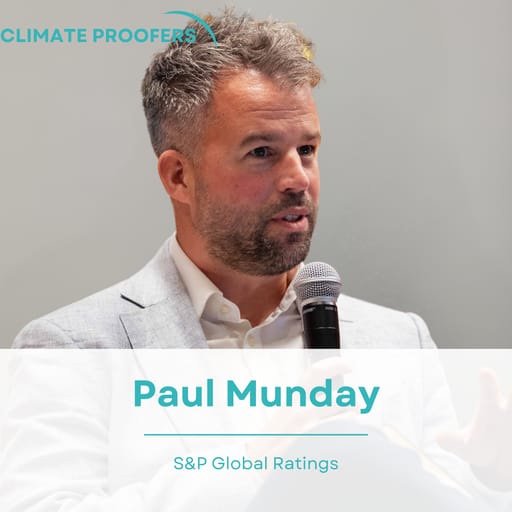
There’s good news and bad news on the state of corporate adaptation planning. Today’s guest — Climate Proof veteran Dr Paul Munday from S&P Global Ratings — joins the pod to tell all.
First, the good news. It looks like many more public companies are disclosing adaptation plans than two years ago — 40% up from 21%, based on a sample of more than 7,500 assessed by S&P. Large, investment-grade corporates in Europe have made even more progress, with 84% disclosing climate-proofing plans.
But, but, but….the substance of many of these strategies is still lacking. Significantly, not a single one of the large European companies analyzed by S&P “demonstrate the most advanced components of adaptation planning”. In addition, only 11 out of 70 have actually implemented their plans.
Paul digs into the latest findings and shares his candid opinions on why corporates seem to be saying more about climate risk while dragging their feet on doing something about it. He also touches on why climate physical risks rarely show up in credit ratings, and what market participants should keep in mind when evaluating companies’ climate-readiness.
For those who want an up-to-the-minute take on corporate adaptation efforts, this is the episode for you.
💡 Read S&P Global’s Mercury Rising report HERE
Listen by clicking the link below, or tune in via Spotify or Apple Podcasts.
We talk about:
👉 S&P Global’s Mercury Rising report and Paul’s caution that quantity of disclosure doesn't equal quality
👉 What components make for a ‘good’ adaptation plan: multi-scenario climate risk assessments, costed adaptation measures, integration into financial planning, and metrics and targets with monitoring frameworks
👉 Why some sectors lead on adaptation preparedness — for example, why chemicals and consumer products companies show above-average adaptation planning
👉 Why physical climate risks are yet to influence corporate credit ratings
👉 What investors should ask — and what good disclosure looks like going forward
Thanks for listening!
Louie Woodall
Editor

